
How to Search for a Lee County Warrant
The Lee County Sheriff's Office posts no public warrant-search page. So match the tool to the problem. The Public Index covers trial-court cases, and Traffic Ticket Search covers a citation. For live confirmation, call the issuing court or the Sheriff's Records/Warrants staff. The online case index pulls in some participating municipal matters. Municipal coverage stays spotty, though. Enter your own full name, date of birth, case number, or citation number when the official form asks for it. A relative can help you find the correct office. A name match is not a status decision, and neither is a blank result.
- Open the South Carolina case-records entry point and select Lee County, or go to the Public Index host.
- Search a known case number first. If it is unknown, try a last name and first name, then narrow with court agency or date.
- For a traffic ticket, use the state ticket search by citation; the name route asks for first name, last name, and date of birth.
- Call the court named on the notice. Ask whether an FTA or warrant was entered and what record confirms its status.
- Call the Lee County Sheriff's Office at (803) 484-5353 for Records/Warrants or Courts service confirmation. No dedicated warrant line was found.
Lee County Warrant Search Limits in the Public Index
The South Carolina Trial Court Public Index is a case search. It is not a statewide active-warrant database. It can lead to Lee County Circuit Court cases and to participating municipal matters. The records guide says results match only the filters you enter. Start with a small set of fields. Add a court agency, case type, action, or date range only when needed. Case details may open in a separate window. The state guide notes that JavaScript and cookies must work in the browser, since a blocked pop-up can stop the case view from appearing. That is a browser quirk, not proof a Lee County case is missing. Use the official Public Index after choosing the county.
Lee County Warrant Search Fields
The Public Index guide lists court and case filters. Exact agency and case-type choices live on the Lee County page itself. The table describes fields the statewide guide documents. It does not promise that each one is required, or that every search shows it.
| Field | Type | Use | Limit |
|---|---|---|---|
| Case number | Text | Find a known file | Lee's exact number pattern was not published in the research. |
| Last and first name | Text | Find a party | Begins With or Contains may be available. |
| Court agency | List | Narrow a court | Available agencies depend on the live county page. |
| Case type and subtype | List | Limit case category | Not a warrant-status filter. |
| Action or date range | List and date | Review docket activity | No universal active-warrant field is promised. |
Lee County Traffic Ticket Search vs Warrant Search
South Carolina's Traffic Ticket Search offers three personal routes. The citation path needs a citation number. The license path asks for a number and state. The name path wants first name, last name, and date of birth. A license field finds your own ticket; it is not a general driving-record product. The tool covers Summary Court matters and some participating municipal courts. A ticket result shows payment and court information, but it cannot confirm that an FTA warrant has been recalled. For Bishopville traffic, call the listed court. For a summary-court citation, call Lee Magistrate. A missed date may have created another process. Keep the citation handy while comparing the ticket and court instructions. The official search offers citation, license and state, or name and birth-date paths.
What a Lee County Warrant Search Returns
A Public Index result is a case view. The official guide identifies names, party type, case number, filed date, status, disposition date, type, subtype, judgment number, and court agency. Docket actions help explain the case history. The guide promises no single warrant status value, though. Ask the issuing court or sheriff about live status in Lee County.
| Warrant number | Format varies by court |
|---|---|
| Case number | Links the order to a Circuit, Magistrate, or municipal file. |
| Action history | Docket dates and descriptions may show a warrant or FTA event. |
| Agency | Shows the court agency associated with the indexed case. |
| Live status | Ask the issuing court or sheriff; it is not guaranteed by the search grid. |
Why a Lee County Search Can Miss a Warrant
A blank result can mean several things. The case may be new, sealed, juvenile, or part of a Family Court matter. It may sit with a court that does not join the index. A warrant can also rest in a law-enforcement file while the public case page shows no new event. Those limits matter in Lee County because the Sheriff posts no public warrant roster and municipal participation is partial. Do not treat a blank screen as clearance. Ask the court that set the date first. Then ask the sheriff about service. A direct answer beats repeated searches with wild guesses.
Where Lee County Warrants Are Checked
The Lee County Clerk of Court, at the county courthouse, maintains Circuit Court and General Sessions records. Lee County Magistrate, at the Judicial Center, handles summary criminal and traffic matters. Bishopville Municipal Court holds its city cases. The Sheriff serves warrants and routes Records/Warrants questions. Bond and recall decisions stay with the issuing court. The Lee County court directory lists the Clerk, Magistrate, Bond Court, and Bishopville Municipal Court. It is a routing source, not a warrant feed. The Sheriff's main number is (803) 484-5353. Lee Magistrate is (803) 484-6463, and Bishopville Municipal Court is (803) 484-5309. Ask which Lee County court owns the case before traveling or mailing money.
SLED CATCH Is Not a Lee County Warrant Search
South Carolina has no single statewide warrant lookup anyone can run from home. SLED CATCH sells criminal-history reports, and its own notice says wanted-person details are left out. A name search there costs $25 plus a $1 online convenience fee. That result cannot tell you whether a Lee County warrant is active or cleared. Treat CATCH as a criminal-history tool, nothing more. For a warrant question, call the Lee County court or the Sheriff's Records/Warrants line. No state office merges every county and lower-court warrant into one public warrant search. The SLED page spells out the split between history data and wanted-person data.
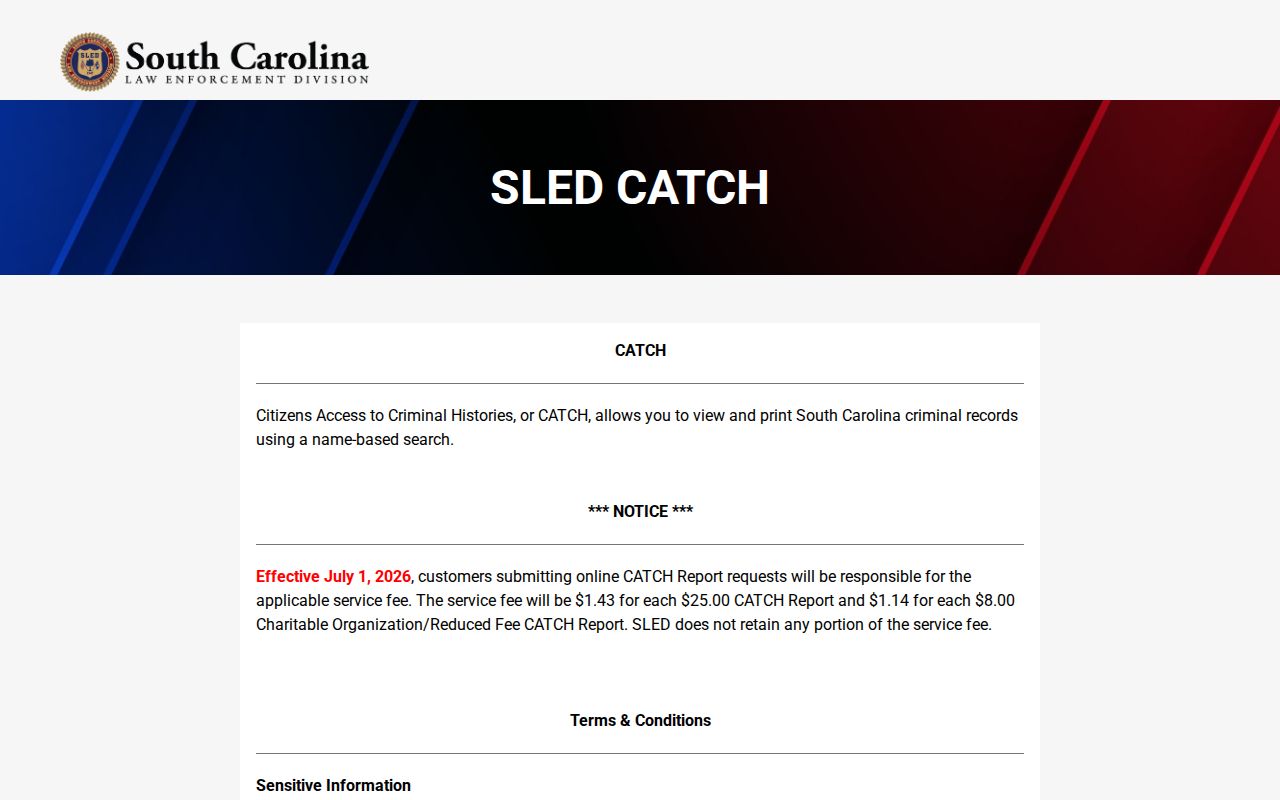
The notice warns that wanted-person information is not part of a CATCH search.
Lee County Warrant Search Access and Restricted Records
South Carolina's Freedom of Information Act opens nonexempt records to the public. Warrant files are not all open, though. An active investigation can stay sealed when release would harm a proceeding, invade privacy, expose a source or method, or put a person at risk. Lee County juveniles get extra protection, with access only where a statute allows it.
Key rules:
S.C. Code Ann. § 30-4-30 covers access to public records.
S.C. Code Ann. § 30-4-40(a)(3) permits limits on some law-enforcement material.
S.C. Code Ann. §§ 63-19-2010 through 2030 protect juvenile records with defined exceptions.
When a Lee County office withholds part of a warrant record, ask it to separate the exempt material from what can be released.
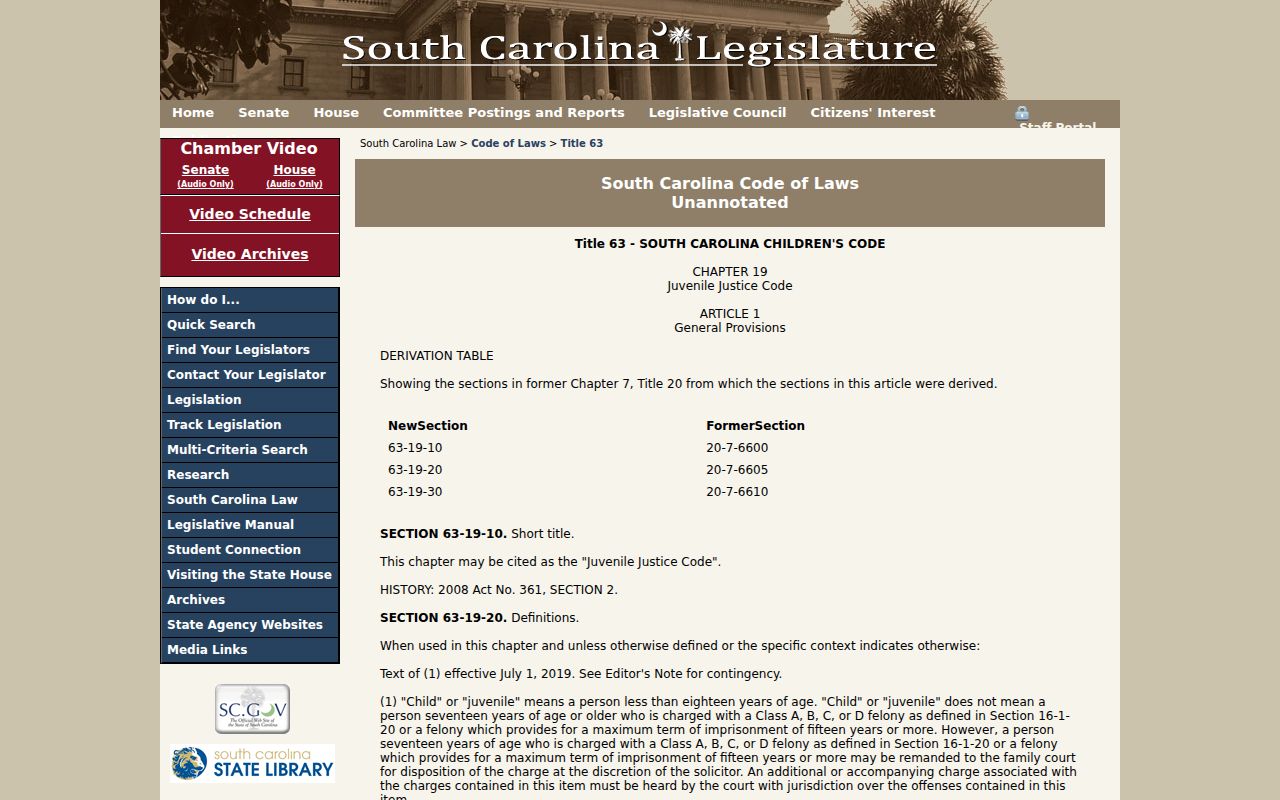
The juvenile-records law explains why some names and files cannot appear in public results.
Lee County Warrant Record Requests Under FOIA
When an online warrant search leaves a question open, a written FOIA request can seek an existing nonexempt record. Send it to the public body that holds the file. For a sheriff-held warrant record, call the Lee County Sheriff's Office first at (803) 484-5353 and ask where Records/Warrants takes requests. The county offers no online form, no fee chart, and no posted processing timetable. Describe your own record, name the court or case if you know it, and give an approximate date range. Say whether you want paper or electronic delivery. If the office denies any part, make it cite the statutory basis. A request cannot force the agency to build a new active-warrant list. The Lee County clerk and the sheriff answer different questions, so pick the right office. For the public-record framework, read the South Carolina FOIA text.