
Arrest Warrants in Lee County
An arrest warrant lets an officer take someone into custody on a court's order. South Carolina law assigns magistrates criminal duties, and issuing arrest warrants sits within that authority. Lee County's Circuit Court and its General Sessions docket carry the higher-level criminal cases and the process that flows from them, so the right record office depends on which court signed the order and where the case stands. A warrant is only the start of a process, though. It must be answered in the issuing court, not argued on the street. Ask which court issued it, and ask too whether a bond, a hold, or a second case rides along with it.
Lee County Arrest Warrant Probable-Cause Review
Before a warrant exists, an officer has to convince a judge. He brings a sworn complaint or affidavit and lays out probable cause, and the showing required depends on the type of process being sought. South Carolina treats private citizens differently: a person cannot go straight to an arrest warrant, so a courtesy summons is issued instead, with further court action available if the recipient fails to appear. In a Lee County case, the Magistrate is the natural first stop for summary criminal matters, while General Sessions runs through Circuit Court. The public index may list the case, yet it is not the full warrant file. South Carolina magistrate law spells out the criminal and arrest-warrant authority these courts hold.
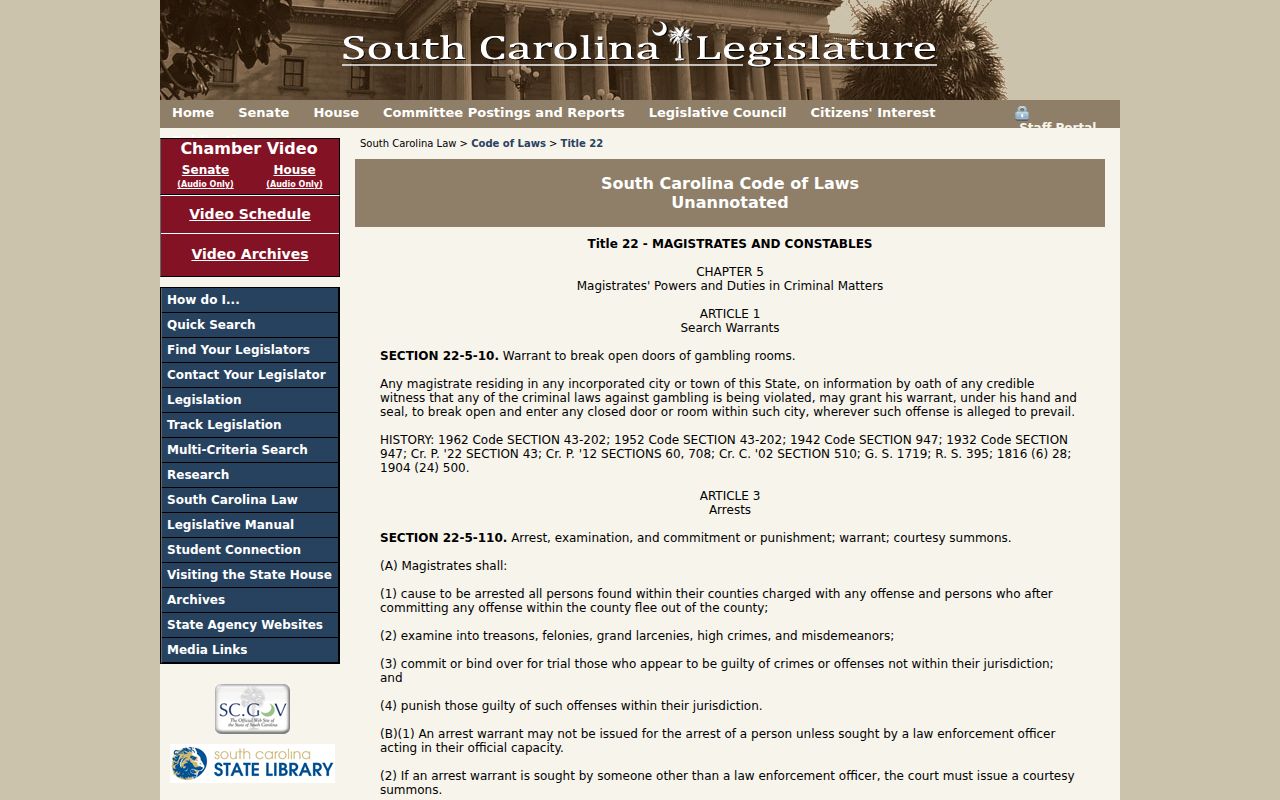
The statute page identifies the role assigned to a magistrate.
What a Lee County Arrest Warrant Contains
Statewide forms and retention rules describe the fields a warrant file usually carries: case number, charge, issuing judge, service dates, and return details. Lee County assigns no distinctive number prefix, and the county publishes no public warrant list to browse. Some official forms hold sensitive identifiers, so treat what you find with care. For your own case, work from the case number and the issuing court's details first.
| Warrant number | Lee format not published |
|---|---|
| Case and charge | Case number, charge description, and date of issue. |
| Issuing authority | Magistrate or other authorized judge and court. |
| Affidavit | Sworn facts supporting the required showing, subject to access rules. |
| Service return | Officer or agency, date served, return date, and result. |
| Bond and status | Terms set by the court; confirm current status with the issuing office. |
The Lee County Arrest Record Tracks Service
South Carolina's summary-court records memo traces a warrant from issue through service to return. Along that trail a Lee County court file may hold a number, the linked case, the charge, the issuing judge, the officer who received it, key dates, and the reason for the return. The Public Index guide lays out case and docket fields, but no universal Lee County warrant status code exists. Descriptors and personal identifiers on statewide forms are schema fields, not details worth reposting. For a live status check, ask the court or the sheriff directly whether the order is active, served, returned, recalled, or quashed, and get the date of the last update. The state retention memo explains how summary-court warrant records are kept.
How Lee County Arrest Warrants Are Served
A warrant tells a lawful officer to act, and in Lee County that officer is often a Sheriff's deputy, the county's main service contact. Service can also fall to a city officer, a constable, or another authorized officer, since assignment drives who carries the paper. The South Carolina Sheriffs' Association directory lists a Bishopville police contact too. Lee County posts no public assignment list. After the arrest, the court and bond process take over. Posting bond, when allowed, secures release and your appearance, though the underlying charge stays open. Call before arriving: the court can explain where to report, whether a lawyer may arrange an appearance, and what bond or hold applies. The Circuit 3 map places Lee among its surrounding judicial counties.
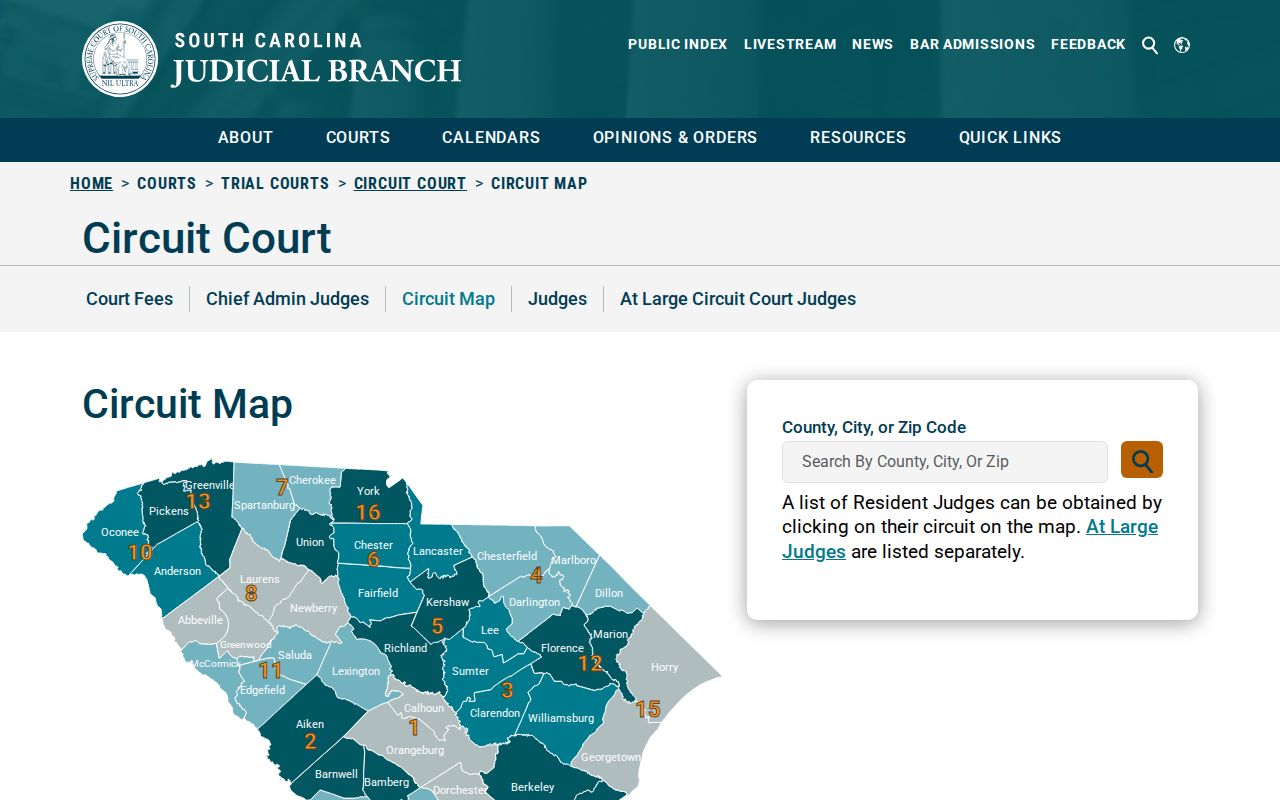
Lee County sits in the Third Judicial Circuit. The Judicial Branch circuit map shows the Circuit 3 assignment.
Lee County Courts Set Separate Warrant Routes
Lee County's offices do not all hold the same records. The Clerk of Court keeps Circuit Court and General Sessions files. The Magistrate handles summary criminal matters and can issue process within its authority, while Bishopville Municipal Court takes qualifying city matters. Family Court process goes through the Family Court and Clerk route, not a generic criminal search. Always get the court's name before treating an arrest warrant as a countywide record. The issuing court controls a recall; law enforcement can confirm service or custody. That division explains why one Lee County lookup shows a case while another office must confirm the warrant itself.
Lee County Arrest Warrant vs Summons vs Bench Warrant
These tools do different jobs. A summons directs someone to appear. An arrest warrant authorizes custody under criminal process. A bench warrant usually follows a failure to appear or a broken bond condition. In a Lee County case, the court notice or docket event tells you which one applies.
| Process | Why it is used | Next route |
|---|---|---|
| Arrest warrant | Criminal process after the required showing | Issuing court and law enforcement |
| Courtesy summons | Directs a person to answer a matter without immediate arrest | Appear as ordered; ask the court about any later action |
| Bench warrant | May follow a missed date or bond violation | Court that set the missed obligation |
A Lee County Search Warrant Is a Different Order
A Lee County search warrant works differently from an arrest warrant. It lets officers search a named place, item, or evidence tied to a person. Probable cause and a sworn affidavit come first. That review happens before the judge signs. South Carolina law then spells out execution, return, and inventory steps. If officers serve one on you, keep the copy and the supporting papers, and talk to a lawyer about what took place. Records can stay closed while an investigation runs. A public case lookup does not promise access to the affidavit or the investigative file, so ask the sheriff or the issuing court what can be requested. The South Carolina arrest and search process chapter sets out the search-warrant rules in full.
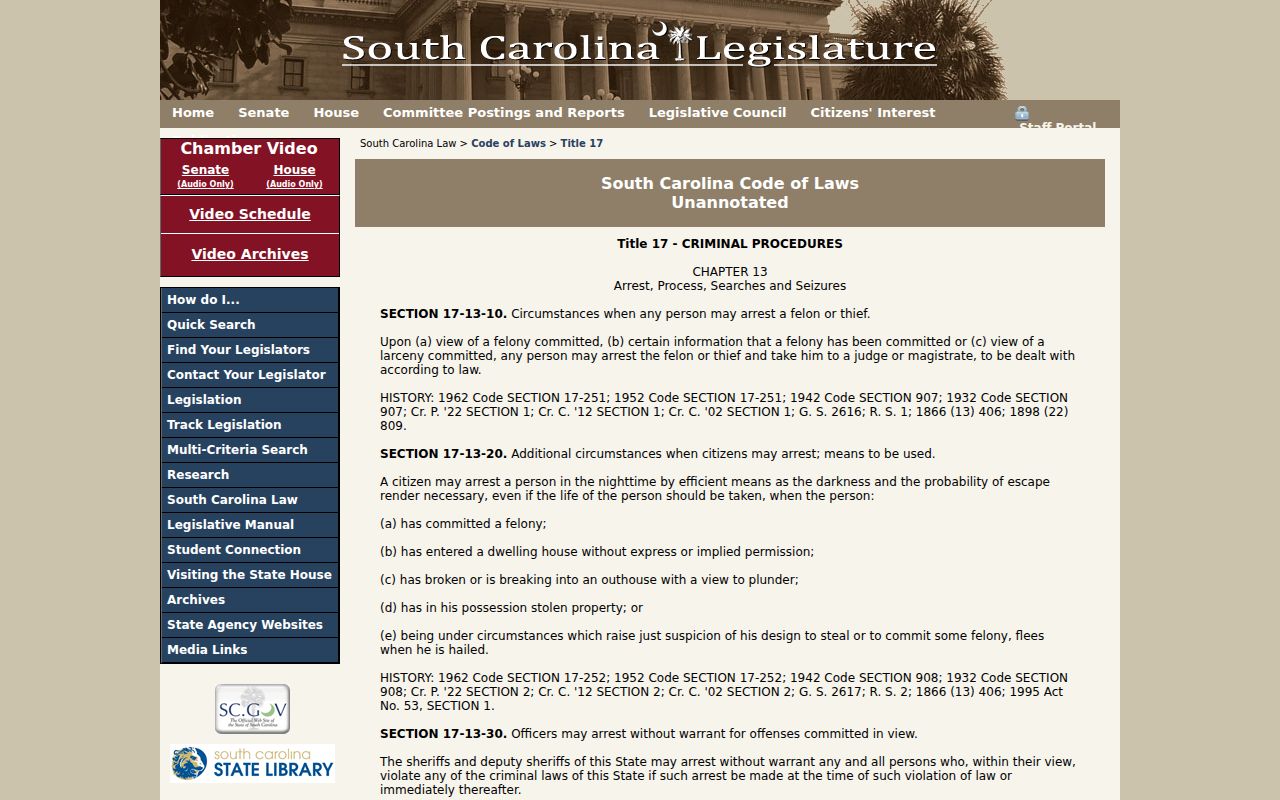
The state chapter covers warrant issue, execution, and return requirements.
What to Do About a Lee County Arrest Warrant
Call the issuing court or a South Carolina lawyer before you show up anywhere. Ask if the warrant is still active, what bond terms apply, and whether counsel can arrange a court appearance. Find out where a voluntary surrender should happen in Lee County, since no office here publishes a walk-in surrender schedule, a warrant window, or one set bond amount. The sheriff cannot change the judge's order, so take the terms straight from the court.
Important: Confirm the issuing court and appearance instructions first. A warrant may lead to arrest during law-enforcement contact, and bond does not end the charge.
Once the Lee County court has acted, hold on to the order or receipt and confirm your next case date. If another jurisdiction has placed a hold, ask whether the local bond covers that separate matter.
Federal and Out-of-State Lee County Warrant Questions
Federal and out-of-state warrants run through a different court and a different service route. Federal cases in South Carolina go to the U.S. District Court. Public docket access may show a record once it is unsealed. A warrant itself may never appear as a public search result. No office here offers a national self-search roster. If a Lee County arrest might involve another jurisdiction, ask the holding agency and your lawyer about a detainer or extradition request. A county case search cannot confirm what a federal court, the U.S. Marshals Service, or another state has entered. For counsel, bond, and court confirmation steps in one place, see the Lee County warrant overview, which walks through the full county process.